Digital twin of a robotic ECU assembly cell
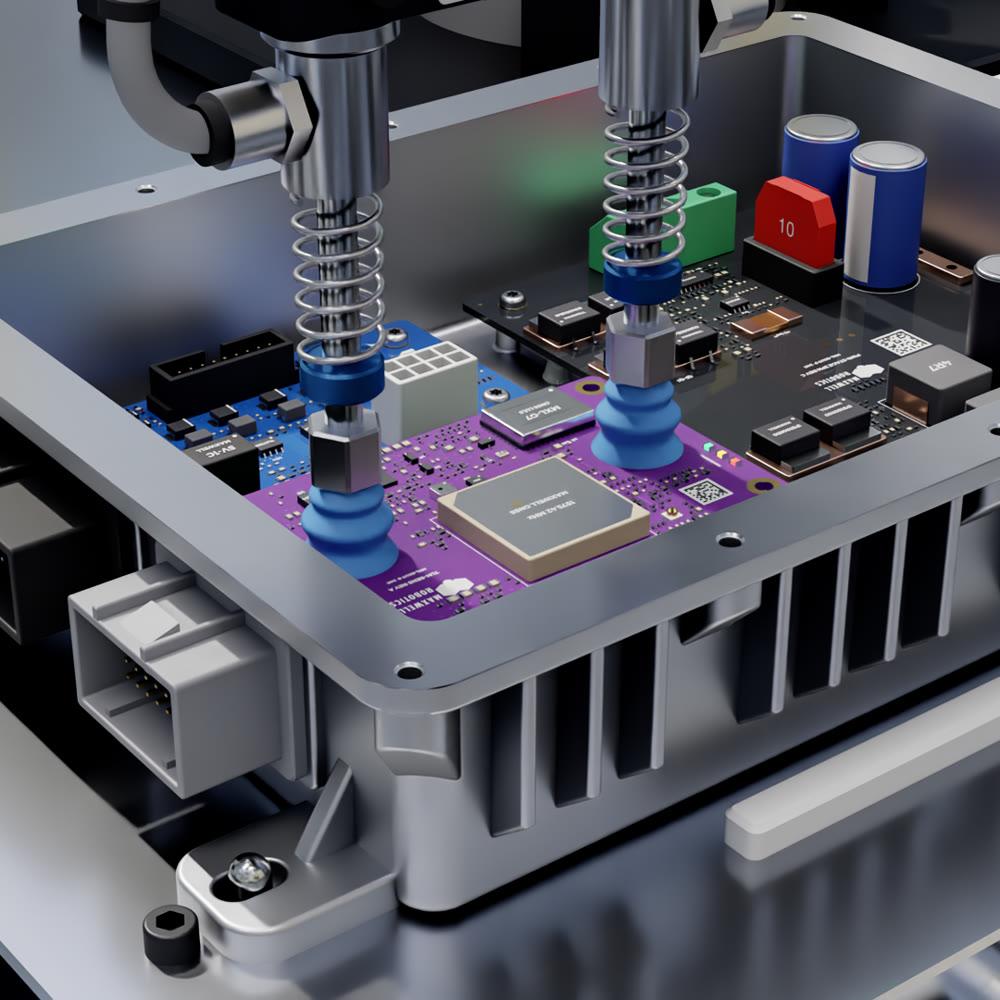
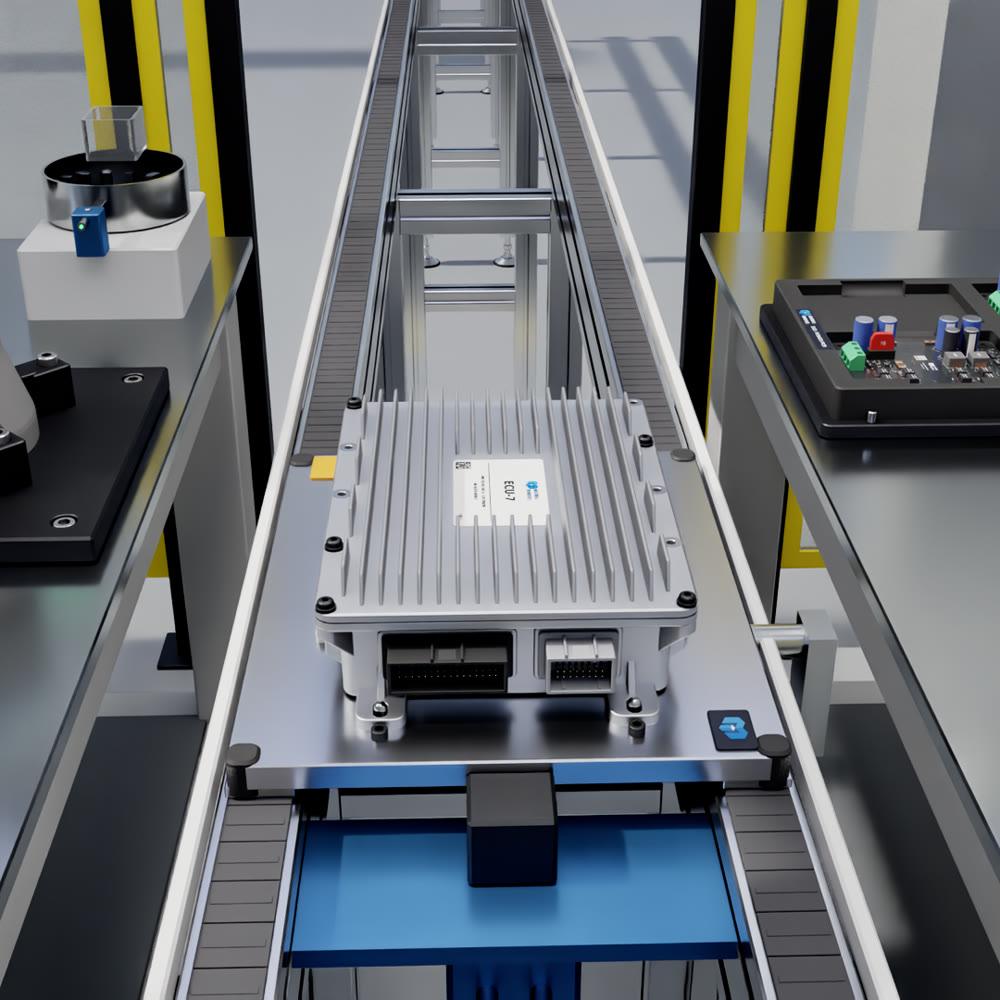
For a German SME in electronics manufacturing, we built a digital twin of a robotic assembly cell for automotive-style control units, before any hardware was bought. Three collaborative robots work around a pallet conveyor: one places the circuit boards into a die-cast housing, one drives every screw, one dispenses thermal gap filler and the sealant bead. The twin shows whether the process fits into the cell, how long a cycle takes and where robots, tools and parts get in each other's way.
Scope of work
- Process design: placing, screwing, dispensing, lid closing
- Parametric CAD of housing, boards, tools, fixtures and conveyor
- Motion planning with inverse kinematics for all three robots
- Collision checking: arm against arm and tool against every part
- Isaac Sim stage with PhysX joint simulation
- Rendered walkthrough film for internal and customer reviews
Key features delivered
- Three collaborative robots: vacuum placement, nutrunner, dispenser
- Zone interlocks so the robots never share the work area
- Connectors that mate as the boards seat, stacked sensor board on standoffs
- Sealant bead inset from the sealing edge, lid screws in a star pattern with a final torque pass
- Cycle time and clearances read directly from the plan
- Fully scripted: change a dimension and the plan, simulation and film regenerate
Outcome
The customer gets the line to look at, measure and argue about before committing to hardware. The twin found real problems early: a nutrunner nose that touched the housing wall, two arms that could collide near the conveyor, and a lid screw position that clashed with a connector. It also shows a cycle time of about six minutes per unit and which steps limit it.